
In the intricate architecture of global finance, where instruments with cryptic acronyms and complex derivatives often dominate headlines, there exists a cornerstone of simplicity and sovereign reliability: the Obligation Linéaire (OL). For the French government, it is the primary instrument for financing the nation’s debt. For investors worldwide, it represents a bedrock of stability, a virtually risk-free asset in a sea of uncertainty. But to label it merely a “French government bond” is to overlook the profound economic, historical, and strategic significance of this financial instrument. The OL is not just a piece of paper or a digital entry; it is a covenant between the state and the capital markets, a mirror reflecting France’s fiscal health, and a critical tool in the broader European financial ecosystem.
The Anatomy of an OL: Simplicity as a Strategy
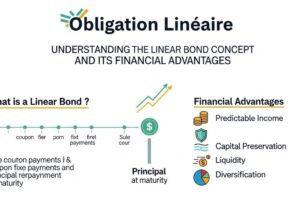
An Obligation Linéaire is, at its core, a straightforward promise. The French Republic, via the Agence France Trésor (AFT), borrows money from investors by issuing these bonds. In return, it pledges to pay a fixed annual coupon (interest) for the bond’s lifespan and to repay the principal (the “nominal” value) at a predetermined maturity date. The term “Linéaire” (linear) is key: it denotes that each OL issue is a new, distinct “line” added to a pre-existing family of bonds with identical coupon and maturity dates. For instance, an OL maturing in 2035 with a 2% coupon is fungible with all other OLs from that same 2035, 2% line, creating a deep and liquid market.
This liquidity is the OL’s superpower. By concentrating trading volume on specific, standardized lines, France ensures that its debt is easy to buy and sell in vast quantities with minimal transaction cost. This liquidity premium is invaluable; it allows France to borrow at lower interest rates than it otherwise might, saving taxpayers billions in financing costs over time. The AFT meticulously manages this ecosystem through regular, predictable auctions, maintaining a transparent dialogue with a network of primary dealers (“Spécialistes en Valeurs du Trésor”), ensuring smooth issuance and secondary market trading.
A Historical Anchor: From Turmoil to Trust
The modern OL system, formalized in the 1980s, was born from a need for stability after the financial turmoil of the previous decades. It replaced a more fragmented and less liquid bond market, institutionalizing France’s commitment to disciplined public debt management. This shift coincided with, and facilitated, France’s deeper integration into the European monetary system and, eventually, the Eurozone.
The creation of the euro in 1999 was a transformative event for the OL. Overnight, it was redenominated from the French franc to the euro, catapulting it from a domestic benchmark to a premier benchmark for the entire Eurozone. Alongside German Bunds, Italian BTPs, and Spanish Bonos, OLs form the essential pillars of the European sovereign debt market. They offer investors a spectrum of risk and return within the single currency area. While Bunds are traditionally seen as the euro’s safe-haven asset, OLs occupy a crucial middle ground—carrying a slightly higher yield than Germany’s, but backed by the AAA (or high AA) credit rating of France, a large, diversified, and politically stable economy.
The OL as an Economic and Political Barometer
The yield on a 10-year OL is far more than just a borrowing rate; it is a real-time referendum on France’s economic prospects and political stability. When investors are confident in France’s fiscal discipline, growth trajectory, and reform agenda, they demand a lower yield to lend their money. When clouds gather—be it concerns over budget deficits, political upheaval, or social unrest—the yield rises, reflecting a higher perceived risk.
This dynamic places the OL at the heart of national policy. French finance ministers are acutely aware that their budgetary decisions are instantly judged by the “marché,” with the OL yield as the verdict. A sharply rising yield can act as a powerful disciplinary force, pushing governments toward fiscal consolidation. Conversely, periods of exceptionally low global rates, such as the post-2010 era, provided France with cheap financing, creating space for stimulus or limiting the pain of deficit reduction. The OL market is thus a constant, unforgiving dialogue between the state and its creditors.
The European sovereign debt crisis of 2010-2012 starkly illustrated this. While the storm raged around the peripheral nations of the Eurozone, French OL yields experienced significant volatility, spiking as the contagion fear spread. The differential, or “spread,” between OL yields and German Bund yields widened dramatically, highlighting how the market was re-assessing the risk of even core Eurozone nations. The crisis underscored that the OL’s strength is inextricably linked to the health of the European project itself.
Strategic Significance: Beyond Pure Finance
The OL’s role extends beyond funding the state. It is the essential raw material for a vast financial infrastructure.
- The Risk-Free Benchmark: Within France, the OL yield curve serves as the foundational “risk-free” rate against which all other euro-denominated assets are priced. Corporate bonds, mortgage rates, and complex derivatives are all referenced to OL yields. A stable and trusted OL curve is therefore vital for the efficient functioning of the entire French financial system.
- Collateral of Choice: Due to their high credit quality and deep liquidity, OLs are the preferred collateral in repurchase (repo) agreements and for posting with clearinghouses. Banks and institutions use them as security to obtain short-term funding, lubricating the wheels of daily financial transactions across Europe.
- A Safe Haven for Savers: For institutional investors—pension funds, insurance companies, and sovereign wealth funds—long-dated OLs are a key instrument for matching long-term liabilities. For retail French investors, products like “Livret A” savings accounts are indirectly linked to state financing, while direct ownership through funds provides a secure income stream.
Contemporary Challenges and the Future of the Covenant
Today, the OL faces a new constellation of challenges. The post-pandemic world is one of elevated public debt across all major economies. France’s debt-to-GDP ratio, hovering around 110%, is at its highest since the post-World War II period. The AFT must now navigate the delicate task of refinancing this massive stock of debt in an environment where the era of ultra-low, zero, or negative interest rates has decisively ended. The “whatever it takes” policies of the European Central Bank, which were massive buyers of OLs, are being unwound, placing more responsibility on private markets.
Furthermore, the geopolitical fractures of the 2020s—war in Europe, energy crises, global strategic rivalry—introduce new layers of uncertainty. The OL, while a symbol of French sovereignty, is also vulnerable to broader shocks to European energy security and economic cohesion.
Yet, the OL system is adapting. The AFT has innovated with green OLs (“OAT verte”), issuing bonds earmarked for environmentally sustainable expenditures, tapping into the vast pool of ESG (Environmental, Social, and Governance) capital. This not only diversifies France’s investor base but also aligns sovereign financing with climate objectives.
Conclusion: The Enduring Line
The Obligation Linéaire is a testament to the power of institutional credibility. It is a debt, yes, but one transformed into a liquid, strategic asset. It carries within it the history of France’s economic modernization, the tensions and triumphs of European integration, and the daily pressures of globalized finance. It is a line on a trader’s screen that whispers of Montesquieu’s “esprit général,” of Colbert’s mercantilism, and of the technocratic rigor of the French Republic.
As France and Europe navigate an era of polycrisis, the OL will remain a critical gauge. Its yield will tell a story of confidence or concern; its liquidity will be a measure of France’s standing in the world. More than just a financing tool, the Obligation Linéaire is a linear thread—une ligne—connecting the French state’s past promises to its future obligations, a fundamental component in the enduring, complex, and indispensable architecture of public debt.